Thursday, November 10, 2016

Allied: what happens when a film gets eclipsed by gossip

Allied: what happens when a film gets eclipsed by gossip

Will Allied be remembered as a war classic – or for the feverish speculation about the relationship between Brad Pitt and Marion Cotillard? From Burton and Taylor to Titanic, here’s what happens when Hollywood loses control
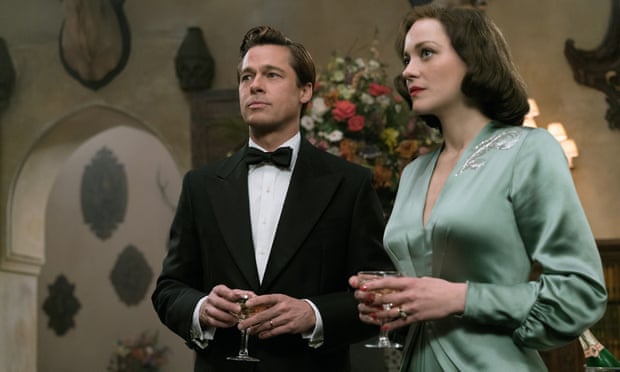

 Upstaged … Brad Pitt with co-star Marion Cotillard in Allied. Photograph: Allstar/Paramount Pictures

The film world approaches its awards season, and is experiencing a recurrent phenomenon concerning the way press promotional comment becomes dangerously unhelpful and unmanaged. The errant publicity takes up as much cultural space as the film, a distracting alternative narrative. It is cognitive hype dissonance.

Robert Zemeckis’s forthcoming Allied is set fair to be a great big blockbuster, a swooning second world war romantic drama. Brad Pitt is Max Vatan, a handsome Allied intelligence agent who has a steamy affair with French resistance fighter Marianne Beausejour, played by Marion Cotillard. But then he is told that she is a Nazi spy and he must kill her. It sounds like a gripping tale, full of passion, transgression, suspicion.
The problem is that the public, disobediently giggling over their social media accounts, reckon they’ve already got the scoop without needing to see the film. As reports came in of Brad’s upcoming divorce with Angelina Jolie, fans convinced themselves he had been cheating on Ange with Marion Cotillard while away shooting this very picture. Mischievous bloggers and tweeters are jujitsu-ing the Allied publicity machine with gags about how it’s Ange who is going to come on to whack Marion. Allied might be upstaged by the gossip, and become best known for something other than itself.

And why shouldn’t it happen? Cotillard and Pitt have denied any affair, but the rumours have been fuelled by how Pitt and Jolie first met. When the couple were filming Mr and Mrs Smith a decade ago they were married to other people. The film ignited their romance. The publicity worked in the film’s favour, just about, though with lingering sympathy for Jennifer Aniston. This kind of spontaneous fact-meets-fiction hype mirage is hardly new. Richard Burton and Elizabeth Taylor met while filming Cleopatra in the late 1950s, and both were married. Their affair was considered hardly less sensational and world-historically important than that of the characters they played.
Brad Pitt and Marion Cotillard as second world war spies in trailer for Allied

A quite different, more serious sort of publicity dissonance concerns The Birth of a Nation, the forthcoming true-life story of a US slave uprising in 1831, led by Nat Turner, played by the movie’s young director Nate Parker — and of course satirically named after DW Griffith’s notorious silent movie of 1915 praising the Ku Klux Klan.
Before anyone had seen the film, they had read about how it had stunned crowds at Sundance and secured a huge studio deal. In the #blacklivesmatter era, this was a movie the liberal media classes were naturally preparing to get behind, until it became known that Parker had been accused of raping a fellow student while at Pennsylvania State University in 2001; he was acquitted. The complainant later took her own life, in 2012. It should be irrelevant to the question of how good the film is. But it can hardly be set aside, especially for a film with lofty ideals.

The news story looms over the film. How to reconcile the two? Richard Brody in the New Yorker boldly tackled the dissonance head on with his comment about the way Parker shows the rapes in his movie. They are “depicted entirely from their significance to men,” Brody writes. “Parker appallingly shifts the scenes around to the male view of the action, and never shows women in discussion among themselves, never presents how enslaved women endure and confront their own oppression.”
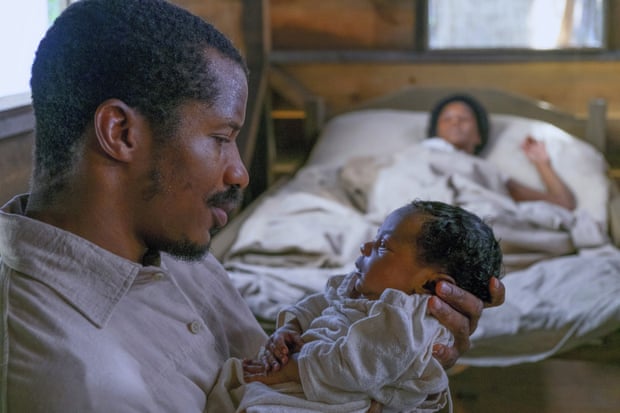
Counter-reading … Nate Parker in The Birth of a Nation, about a US slave uprising. Photograph: Jahi Chikwendiu/AP

A similar kind of real-life counter-reading has been happening for decades with Roman Polanski’s films, to which the director has long made it silently plain he will not concede an inch. Time will tell if Parker must pursue the same course, although their legal positions are different.

These cases are quite different from the phoney stories planted by studio flacks from time immemorial, dependent on co-operative artists and a complaisant press. Fixers from the Hollywood golden age like MGM’s Howard Strickling and Eddie Mannix and Fox’s Harry Brand were always creating bogus romances, fake intrigues and hokey life-stories to promote movies or distract attention from brewing scandals. The Coens’ Hail Caesar! (2016) and Alexander Mackendrick’s Sweet Smell of Success (1957) have scenes about this seedy byproduct of the fantasy-factory.

Press rows sometimes dwarf their films and sometimes they don’t. Before Doctor Strange was released, there was widespread unease about the portrayal of the Ancient One, regendered and reconceived for the movie and played by Tilda Swinton, with a “Celtic” origin. Was the Tibetan identity erased out of deference to the important Chinese market? Very possibly. As things turned out, her weirdness seemed to go beyond national identity.
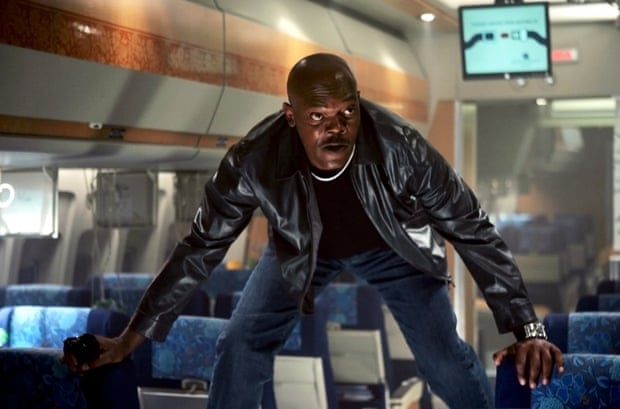
Will change film-making for ever (or not)… Samuel L Jackson in Snakes on a Plane Photograph: New Line/Everett/Rex Features

Or take a movie that was once the most discussed film of its day, a film which the commentariat regarded with saucer-eyed seriousness as a zeitgeist phenomenon: Snakes on a Plane (2006). It is difficult to believe now, but this all-but-forgotten Samuel L Jackson thriller about — well — snakes on a plane, was once feverishly discussed, because of its much-vaunted but wildly exaggerated status as an internet phenomenon. The producers allegedly incorporated online feedback into production with extra shooting days. Pundits believed that this Wiki-ised technique could be used for all films from then on. But it wasn’t. And when the film turned out to be a bit of a dud, this wall of chatter turned to sheepish silence.

The list of dissonant films goes on. The Interview (2014) was a film satirising North Korean leader Kim Jong-un that led to hacking attacks, which in turn led to apparently craven industry moves to re-edit the film and limit its distribution. The resulting hype built the movie up in everyone’s mind as a classic of satire, standing up heroically to both the North Koreans and the cringing producers. When it finally came out, it was clear that it wasn’t that great. It didn’t fit the narrative created for it.
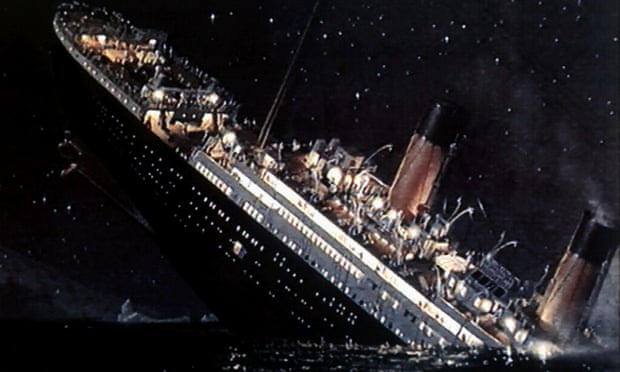
Not the disaster everyone said it would be … Titanic. Photograph: Allstar

Other films have identities which leaked into the real world of the news: the Watergate mole took his nickname from the title of the porn film Deep Throat (1972). It wasn’t simply arbitrary. In the Watergate era, when cynicism about a dodgy president was becoming widespread, there was a kind of weird karmic alliance between this blase mood and the new porno chic.

Very strangely, in recent times, there has been an attempt to force this kind of branding. In the runup to the Brexit vote, Boris Johnson was bellowing that the referendum would be “independence day” — apparently attempting to coattail the publicity of the sci-fi movie sequel with that name. Brexit was victorious, but no-one remembers Boris’s cheery, lame film-title wheeze.

The strangest example of publicity dissonance was that which accompanied the release of James Cameron’s gigantic blockbuster Titanic (1997). Of course, this is remembered as a colossal triumph, which involves a willed amnesia about the huge groundswell of stories before its release about the impending opposite: how terrifyingly unsafe the production was and how brutally Cameron had been driving his cast. There were stories about how Kate Winslet had chipped a bone in her elbow during filming and how she seriously thought she might drown in the tank in which the “sinking” scenes were filmed. The narrative was clearly all about how the curse of Titanic was about to strike again …. But it all vanished like snow off a ditch when the film emerged and became a hit.

Allied is in cinemas from 23 November
• This article was amended on 7 November 2016 because an earlier version wrongly said Tilda Swinton’s scenes in Doctor Strange were shot in Tibet; they were shot in Nepal.

Sunday, November 6, 2016

Life on the line (2016) is initially released in the USA

Life on the line (2016) is initially released in the USA


As Life on the line movie is based on a crew of men who are doing a high- wire work in an Electrical grid and suddenly the electrical grid are hit by a deadly storm. The category of this movie is an action drama. The movie is based on a crew of men who do work in a dangerous electric grid. They work on a high- wire in an electrical grid which is hit by a deadly storm. The movie (Life on the Line) is released in the USA today. And it is running all over the cinemas in the USA.

Cast:
John Travolta acts as a Hero in this movie and the named by which he acts in the movie is Beau.

Kate Bosworth acts in this movie as a heroine and the named by which she acts in this movie is Bailey.

Devon Sawa as Duncan, Julie Benz as Carline, Ryan Robbins as Eugene, Ty Olsson as Danny, Sharon Stone acts as Duncan’s mother, Reese Alexander as Russell. As Chad, Dubea is the executive producer of the movie Life on the line.

Watch the Life on the Line International Trailer.


 source by  http://www.newsmaritime.com/2016/life-line-2016-initially-released-usa/

Life on the Line

Release date:November 18, 2016
(limited, On Demand)

Studio:Lionsgate Premiere

Director:David Hackl

MPAA Rating: R ( for some violence/grisly images and brief strong language)

Screenwriters: Primo Brown, Marvin Peart, Peter I. Horton

Starring: John Travolta, Kate Bosworth, Devon Sawa, Julie Benz, Gil Bellows, Ryan Robbins, Sharon Stone

Plot Summary:


"Life on the Line" is a riveting action thriller and family drama centered on Beau (John Travolta), his beloved niece Bailey (Kate Bosworth) and the hardworking men who risk theirlives to work "on the line" and keep the electric grid running. These unsung heroes brave raging storms and dangerously dizzying heights in their dedication to keeping the populace safe. Toiling hundreds of feet in the air on wires carrying as much as 500,000 volts of electricity, tragedy is often inches away. Haunted by the electrocution death of his brother, Beau is devoted to Bailey and determined to see her go off to college and away from the life of linemen. Bailey has other plans, which include the strapping second-generation lineman Duncan (Devon Sawa), whom Beau despises. A deadly tempest is brewing and headed straight to their Texas town. Beau, Duncan and a legion of linemen are thrust into the eye of the storm and must face down impending disaster to keep their community connected. This compelling action drama also stars Sharon Stone, Ryan Robbins, Julie Benz and Gil Bellows.

source by  http://www.comingsoon.net/movie/life-on-the-line-2016 

Matt Damon On ‘Manchester By the Sea’ & Why He Had Final Cut Approval – Produced By NY

Matt Damon On ‘Manchester By the Sea’ & Why He Had Final Cut Approval – Produced By NY


                                            Scott Roth/Invision for PGA/AP Images

As a producer on Kenneth Lonergan’s Manchester By the Sea, Matt Damon had push-comes-to-shove final cut approval over the film–a safeguard against the legal and reputation-staining legacy still attached to Lonergan over his troubled 2011 film Margaret.
“It was just a way of keeping everyone calm,” Damon said, appearing via Skype at a Produced By panel about the making of Manchester By the Sea, due out next month and which is already being talked about as an Oscar candidate.” “If stuff got out of control, I would come in and very rationally and calmly help out.”

As it happened, Damon didn’t need to exercise final approval over Manchester, which was among the most sought-after films at this year’s Sundance Film Festival, with Amazon and Roadside Attractions buying up distribution rights.

Damon praised Kimberly Steward and her company K Period for being willing to bankroll a Lonergan film when no one else would. “It was not an easy decision. If it was, we would have had a lot of people jockeying to make the movie. We had nobody except K Period.”

This was due, Damon said, to Lonergan’s reputation: “Kenny’s in a certain place now that he really wasn’t then,” Damon said. “His reputation was really sullied.”

Finally released in 2011 without a marketing push and with some critics hailing it as a masterpiece, Margaret played out as Lonergan’s magnum opus that wasn’t, its legacy playing out in court with producer Daniel Gilbert arguing that Lonergan had failed to meet his obligations to deliver a releasable film on time, and Lonergan’s reps arguing that Gilbert had hijacked his art.

Manchester By the Sea stars Casey Affleck, Michelle Williams and Kyle Chandler. Damon said he initially developed the project as an uncle/nephew story with actor Jon Krasinski, then brought in Lonergan to write the script.


But Lonergan was “under water with Margaret at the time,” said Damon, who also had a role in that film (indeed, Damon joked that when he ran into Lonergan’s attorney at Sundance this year, they had last seen each other when Damon was deposed in the Margaret case.)

Damon’s involvement with Manchester morphed according to his own commitments and Lonergan’s growing interest in the project,

Joining Damon were the film’s five principal producers, including Kimberly Stewart, Lauren Beck, Chris Moore and Kevin Walsh. Moore, who produced Good Will Hunting for Damon and Ben Affleck, cautioned against optimism over the fact that an emotionally tough move like Manchester got made in today’s Hollywood climate. He calls Manchester an anomoly in a film business that’s otherwise “wildly in a moment of a bubble,” with money floating around for independently financed films but with a huge problem at the other end: no audience.

“In the next five years, we gotta figure out how to get people back out there to watch these movies,” he said.

source by  http://deadline.com/2016/

European Film Awards Announce Best Film Nominees

European Film Awards Announce Best Film Nominees


'Toni Erdmann' leads new nominations but faces tough opposition from three European grand masters

In line with expectations, five of the highest-profile European films of the year, four Cannes competition competitors, will vie for Best European Film at this year’s European Film Awards: Paul Verhoeven’s “Elle,” Ken Loach’s “I, Daniel Blake,” Pedro Almodovar’s “Julieta,” Lenny Abrahamson’s “Room,” and Maren Ade’s “Toni Erdmann.”

But it’s the film from the least-known of the five directors, “Toni Erdmann” — at least until it bowed at the Cannes Festival to one of the best critical receptions in years — that leads the pack with five major European Film Award nominations, which were announced this Saturday in Seville.

Stars Isabelle Huppert has scored a nomination for best actress for “Elle,” and Hugh Grant will compete for the best actor plaudit for “Florence Foster Jenkins.”

Staged by the European Film Academy, the European Film Awards take place on Dec. 10 in Wroclaw, Poland, the European Capital of Culture 2016, on Dec. 10.

In the European Film Awards shortlists, notably only “Toni Edmann” has scored nominations in all five major categories. It is followed by four for “I, Daniel Blake,” which went on after its Cannes Palme d’Or win to score Audience Awards at Locarno and San Sebastian.

So the European Film Awards could allow sweet revenge for Maren Ade; or  go another way, becoming a tribute to one or more of Europe’s film greats.

That scenario could spell compensation for “Elle,” which has notched up three EFA nominations, but was again shut out of major kudos at Cannes, despite some rave reviews for both Huppert’s performance and for Verhoeven.

Pedro Almodovar’s “Julieta” scored three main nominations — feature, director and actress for Emma Suárez and Adriana Ugarte — for a film which Almodovar once contemplated shooting in English.

Beyond their European heavyweight directors, the main category EFA shortlists offer further recognition for actors and actresses who, though not quite international stars, are now gleaning tributes for their career and recent performances. Valeria Bruni Tedeschi, for example, receives a homage at the Seville European Festival.

Staged by the European Film Academy, the European Film Awards take place on Dec. 10 in Wroclaw, Poland, the European Capital of Culture 2016.

source by  http://variety.com/2016/film/awards/

European Film Awards Nominations: ‘Toni Erdmann’, ‘Elle’, Hugh Grant & More

European Film Awards Nominations: ‘Toni Erdmann’, ‘Elle’, Hugh Grant & More


Nominations were announced this afternoon at the Seville European Film Festival for the 29th European Film Awards. Among the titles in the Best European Film race are four pics that made their debuts in Cannes earlier this year including Palme d’Or winner I, Daniel Blake from Ken Loach
Also transferring from the Croisette are Paul Verhoeven’s Elle, Maren Ade’s Toni Erdmann and Pedro Almodovar’s Julieta. Each of those three are the Oscar submissions for the Foreign Language race from France, Germany and Spain, respectively. Rounding out the list vying for the Best Film prize is Lenny Abrahamson’s Room which was nominated for the Best Picture Oscar last year.

Guy Ferrandis/Sony Pictures Classics

Notable among the acting nods this year are Isabelle Huppert for her lauded turn in Elle, as well as the leads from Toni Erdmann and Hugh Grant in Florence Foster Jenkins.

The EFAs have been quite prescient in recent years when it comes to the outcome at the Academy Awards with such winners as Ida, The Great Beauty and Amour scooping prizes at both. The EFA ceremony will be held in Wroclaw, Poland on December 10. Below is the list of nominees unveiled today along with the previously announced contenders in Animated Feature and Comedy.

Amy Adams suffered vertigo-like feelings to connect with main role in new movie ‘Arrival’

Amy Adams suffered vertigo-like feelings to connect with main role in new movie ‘Arvrial’


                                  Amy Adams (r.) as Louise Banks in her new movie "Arrival."

Playing a linguist enlisted to communicate with aliens in her new movie “Arrival” made Amy Adams sick to her stomach.

But that was just the sensation she craved.

“I know it sounds strange, but characters live in different places in my body,” the five-time Oscar nominee told the Daily News.

“My character, Louise, lived in my belly, and that may sound weird, but I just had a stomachache the whole time” during filming).
Part of it came from “Arrival” director Denis Villeneuve saying he wanted her to feel off balance and a sense of vertigo.

     Amy Adams stars in “Arrival”, coming out at nearly the same time as “Nocturnal Animals."


“I knew whenever I felt nauseous I was connected with (Louise),” said Adams.

That approach has been working for her. While filming the 2009 comedy, “Night at the Museum: Battle of the Smithsonian,” for example, she unconsciously developed a strange verbal tic to portray Amelia Earhart. It helped her take flight as the aviator — and then disappeared by the end of production.

“Arrival,” a sci-fi drama opening Friday that orbits around deep philosophical issues resulting from humanity’s first contact with extraterrestrials, arrived at a time when Adams was looking to act less. Determined to spend as much time with her daughter Aviana, now 6, each script she chooses has to be worth the commitment.
“For me, it just has to be the right time, the right place (for a role),” said Adams. “I’m most likely not going to be able to go to Budapest and shoot something.”

So it’s odd that after two years largely missing from the big screen, she has two films reaching theaters a week apart. Adams also stars in director Tom Ford’s “Nocturnal Animals,” a critics’ darling at the Venice Film Festival that opens in New York on Nov. 18.

                                                Amy Adams on the set of "Arrival."

She could relate as a mother to Louise’s anguish tending to a dying daughter in “Arrival.”

But there was less to relate to with her depressed art gallery owner in “Nocturnal Animals,” whose pampered life is upended when her ex-husband (Jake Gyllenhaal) sends her his first novel, a violent misogynist thriller inspired by her.
“When you realize she doesn't like herself, people can identify with that,” Adams said. “She wasn’t happy with the choices she made in life.”

    Jake Gyllenhaal portrays Tony Hastings in writer/director Tom Ford’s romantic thriller “Nocturnal Animals."

If there’s one common denominator in a résumé that ranges from Lois Lane to a con artist in “American Hustle” to a nun in “Doubt,” it’s her arctic blue eyes, which have become a trademark. And it’s particularly, well, glaring in Ford’s camera lens. “I kind of maintain eye contact a creepy amount,” said Adams. “So I think it’s sort of translated on film.”

There will be time to decompress on her next movie, “Disenchanted,” the sequel to her breakthrough turn as a singing animated storybook princess who falls in love with a lawyer in the real world in 2007’s “Enchanted.” Unlike “Nocturnal Animals,” it’s the type of film Aviana can actually see.

Adams is also excited to rejoin a production that feels like a high school reunion. “I’ve gained a little weight since then, so we will see,” she said with a laugh.

                      Tom Ford’s “Nocturnal Animals” opens in New York

Her two current movies land back-to-back in theaters at a time when the country may need some major escapism after Tuesday’s elections.

Fortunately, aliens like the ones in “Arrival” haven’t shown up to judge humanity in real life in the midst of the most polarizing presidential race in memory.

“One can only surmise what they would think,” Adams said. “I just hope they don’t show up.”

source by  http://www.nydailynews.com/entertainment/movies/

Friday, November 4, 2016